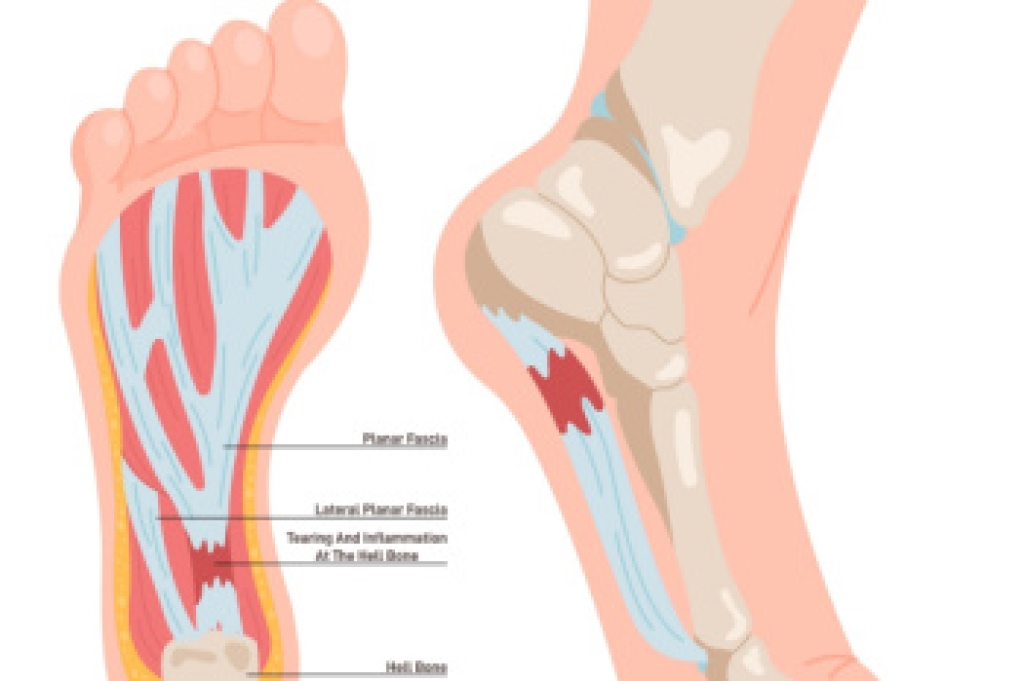
Plantar fasciitis develops when the plantar fascia becomes irritated. This thick band of tissue connects the heel bone to the toes and supports the arch of the foot during walking. When excessive tension places repeated stress on this tissue, small areas of damage and inflammation may develop. Many people notice sharp heel pain when taking their first steps in the morning or standing after sitting for a long time. Although discomfort may improve with movement, pain can return after prolonged walking or standing, making everyday activities difficult.
Several factors contribute to plantar fasciitis, including foot and ankle biomechanics. People with flat feet may experience increased tension across the plantar fascia, while those with high arches may have less flexibility and reduced shock absorption. Abnormal foot motion can also change how pressure travels through the heel during walking. Age is another risk factor because the plantar fascia and heel fat pad may become less resilient over time. Obesity can increase pressure on the feet, placing additional strain on the supporting tissues. Other contributing factors include sudden increases in exercise, tight calf muscles, and wearing shoes that lack adequate arch support.
Plantar fasciitis symptoms often include tenderness beneath the heel and discomfort along the arch. Pain may become worse after running or spending hours on hard surfaces. Some people change their walking patterns to avoid pressure, which can create additional strain elsewhere in the foot. A podiatrist evaluates these symptoms by reviewing medical history and examining foot structure, flexibility, and walking mechanics. The examination may include pressing specific areas to locate tenderness. If symptoms suggest another condition, such as a stress fracture, the podiatrist may recommend X-rays or other imaging tests to clarify the diagnosis and guide treatment.
Treatment depends on symptom severity and the factors contributing to heel pain. A podiatrist may recommend wearing supportive footwear, custom orthotics, and temporary activity adjustments to reduce stress on the plantar fascia. Targeted stretching for the calf muscles and plantar fascia may also improve flexibility. Ice application helps ease discomfort, while medication may be considered when medically appropriate. If pain persists, additional options may include night splints or advanced in-office treatments. Surgery is rarely necessary and is generally considered only after conservative care fails. Early evaluation helps prevent prolonged discomfort and support recovery. If plantar fasciitis is suspected, it is suggested that you consult a podiatrist for effective relief and treatment solutions.
Plantar fasciitis is a common foot condition that is often caused by a strain injury. If you are experiencing heel pain or symptoms of plantar fasciitis, contact Michael Bess, DPM from Florida. Our podiatrist can provide the care you need to keep you pain-free and on your feet.
What Is Plantar Fasciitis?
Plantar fasciitis is one of the most common causes of heel pain. The plantar fascia is a ligament that connects your heel to the front of your foot. When this ligament becomes inflamed, plantar fasciitis is the result. If you have plantar fasciitis you will have a stabbing pain that usually occurs with your first steps in the morning. As the day progresses and you walk around more, this pain will start to disappear, but it will return after long periods of standing or sitting.
What Causes Plantar Fasciitis?
- Excessive running
- Having high arches in your feet
- Other foot issues such as flat feet
- Pregnancy (due to the sudden weight gain)
- Being on your feet very often
There are some risk factors that may make you more likely to develop plantar fasciitis compared to others. The condition most commonly affects adults between the ages of 40 and 60. It also tends to affect people who are obese because the extra pounds result in extra stress being placed on the plantar fascia.
Prevention
- Take good care of your feet – Wear shoes that have good arch support and heel cushioning.
- Maintain a healthy weight
- If you are a runner, alternate running with other sports that won’t cause heel pain
There are a variety of treatment options available for plantar fasciitis along with the pain that accompanies it. Additionally, physical therapy is a very important component in the treatment process. It is important that you meet with your podiatrist to determine which treatment option is best for you.
If you have any questions, please feel free to contact our office located in West Palm Beach, FL . We offer the newest diagnostic and treatment technologies for all your foot care needs.
